



Some products never grow old. On the contrary, they seem to improve with age, as is the case with the AE1.
The AE1 is a speaker with a legendary background, designed for people who know what they want: speed, dynamics, and impact—just as its creator, Phil Jones, intended. And, of course, bass that defies the laws of physics.
Phil Jones, the father of the AE1
Acoustic Energy AE1 came out in 1987, when Phil Jones set out to show that a speaker barely bigger than a shoebox could play loudly, with bass that made you forget about the laws of physics. Phil Jones, known as a ‘bass freak’ (he plays bass guitar), eventually moved on to other projects, but the idea he started still lives on, and the AE1 returns 40 years later.

Winter CES 1997 report
I met him at CES 1997 in Las Vegas. He had started a new company: Platinum Audio. In a small room at the old Alexis Park, he showcased a pair of speakers that were the opposite of the AE1: the huge Air Pulse 3.1 full-range horn speakers, which cost $100,000 30 years ago, as I wrote in my article for DNA/Diário de Notícias.
The AE1 and the massive Pulse speakers were very different in size, but perhaps not so different in spirit. Jones always cared most about dynamics, speed, and playing music without compression, and the Pulse really pulsed with bass frequencies!
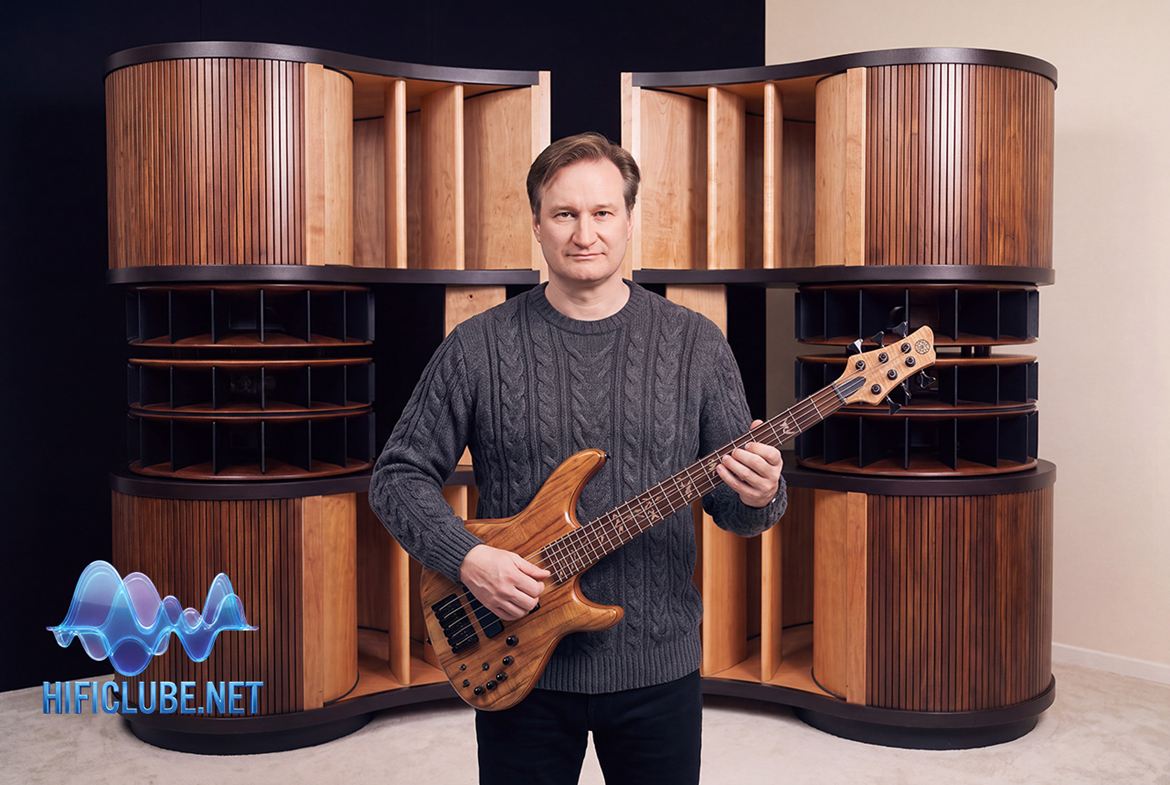
Phil Jones and the incredible Platinum Pulse 3.1 (Vegas 1997)
The Return of the AE1
Nearly forty years later, the AE1 has returned, though Phil Jones is now credited only as the original model's creator.
But keep in mind, the AE1 40th Anniversary isn’t just the old AE1 taken out of storage, cleaned up, and sold with a special badge. It doesn’t have any genuine parts, mostly because the old production tools are gone. That’s also why the last AE1 Classic stopped being made in 2016.
High-gloss shoe box
So Acoustic Energy had to rebuild the AE1 to the original technical specifications, making sure it didn't lose what made it special in the first place.
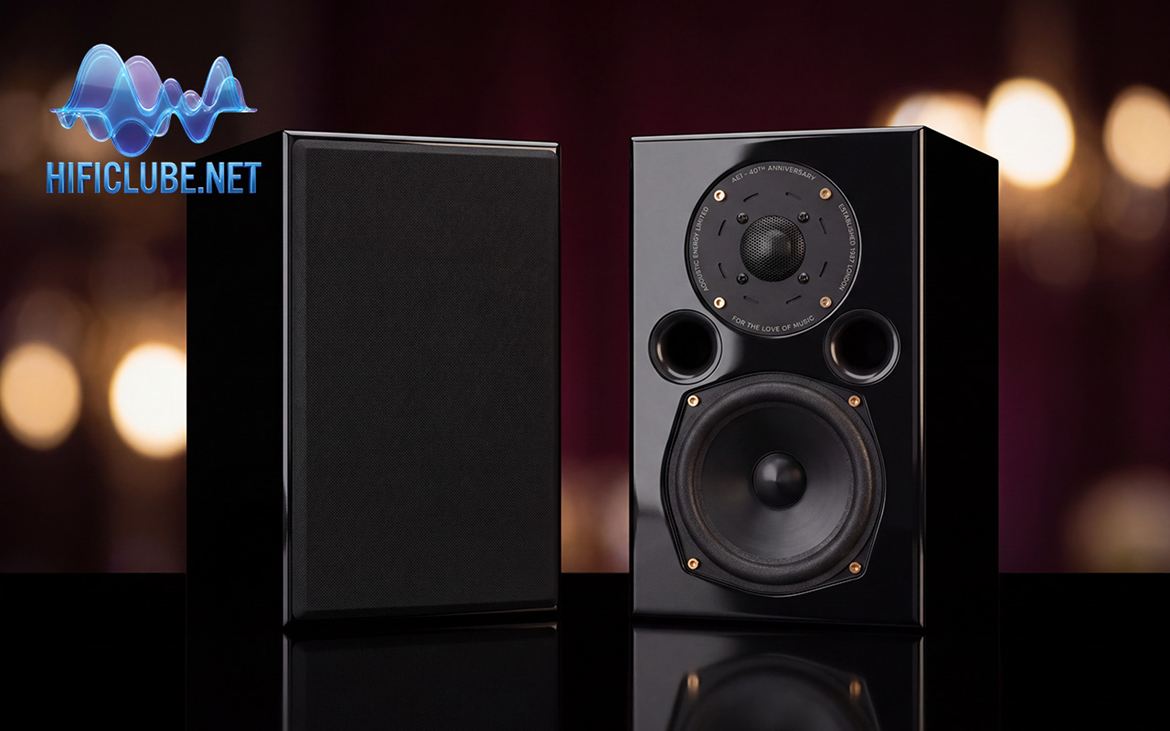
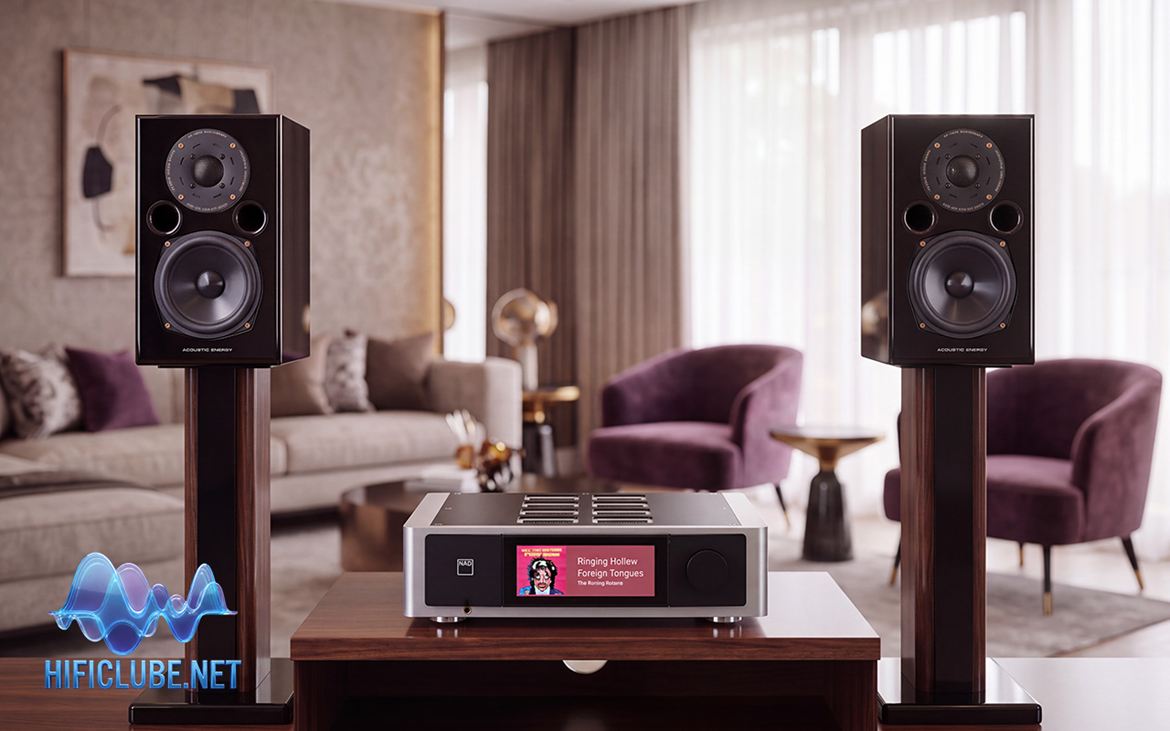
The magnetic grille dispenses with mounting holes, and the High Gloss Walnut and High Gloss Black finishes (I reviewed the black one) have 10 layers of lacquer. This gives the small AE1 a much more luxurious look than the plain original.
Among other quirks, the AE1 was known for having its cabinet interior lined with a cement-based adhesive to increase rigidity and control vibrations.
Same spice, same flavour
In the 40th-Anniversary version, Acoustic Energy uses its current RSC (Resonance Suppression Composite) technology with HDF panels and a bituminous damping layer. I’ve used this approach in speakers I’ve built over the years, so I can vouch for it.
But there’s an interesting technical detail here. This time, the goal wasn’t just to make the cabinet completely inert. Instead, they tuned the internal resonance, so it sounds like the old cabinet. In other words, they used modern technology to bring back an old feature. Chapeau!
Aluminium cones
The size hasn’t changed: it’s still 29.5 × 18 × 24 cm, but each speaker weighs a surprising 7 kg. The front still features the metal-cone midrange/woofer and the tweeter, plus the dual front reflex port, now rounded on the inside and outside to increase airflow and reduce turbulence.
The drivers are all new. The midrange/woofer is now 125 mm, with an anodised aluminium cone that’s hardened with a ceramic coating on both sides. The larger surface area gives it more sensitivity, so it can move more air and reduce distortion. The motor also has a shorting ring to reduce unwanted magnetic distortion.
The tweeter now has a 29 mm anodised aluminium dome with a rear absorption chamber and uses ferrofluid to help with heat dissipation and reduce compression.
The new speakers perform better at the limits of their operating range, enabling a simpler, less intrusive crossover design with a 2.8 kHz frequency cut. The specified response is 50 Hz to 45 kHz (±6 dB), sensitivity is 87 dB/2.83 V/m, nominal impedance is 6 ohms, and power handling reaches 150 W—remarkable for such a small speaker.
A taste of tubes
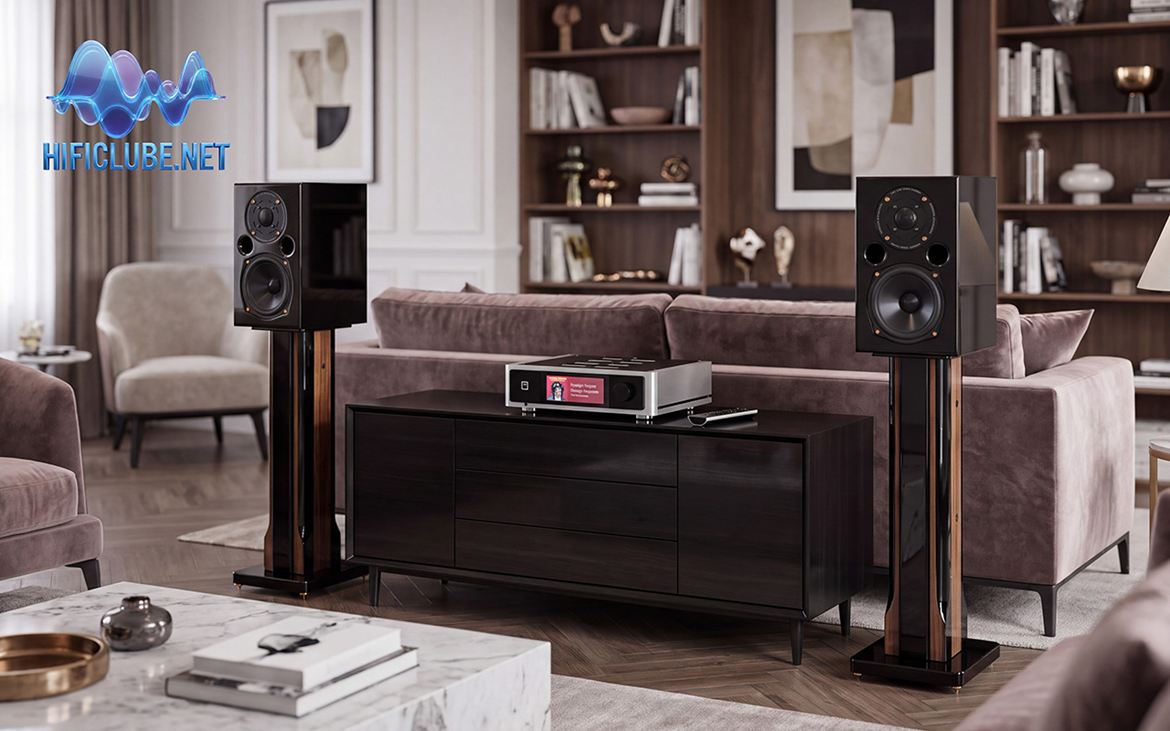
Based on the specs, the AE1s don’t seem especially hard to drive. Still, I wouldn’t suggest using an 8-watt tube amp like the LAB12 Mighty and then complaining to the distributor about missing bass.
But I couldn’t resist trying it anyway. There was no shortage of bass—at least, as much as you can expect (-6 dB at 50 Hz compared to 200 Hz). The AE1 clearly likes power, so I switched to a NAD M33 V2 for the heavy lifting.
This experiment showed that, tonally, the AE1 works really well with tube amps.
Beauty is in the ear of the listener
Forty years have gone by, and I am still surprised by the discrepancy between what I see and what I hear. There are no miracles here. A 29-centimetre-tall speaker can’t reproduce 25 Hz bass lines like a large 4-way speaker with two 25-centimetre woofers. If you expect the AE1 to shake your windows or hit you in the gut, it’s not the right speaker for you. Or you’ll need a subwoofer.
The AE1’s quick response has always been its secret.
To have is not the same as to be
What’s more interesting is how the AE1 handles all the bass it can produce: it’s fast, tight, and clear, with a punch that seems impossible for its size. The AE1’s quick response has always been its secret. On top of that, the sound stays clear and never gets muddy or lingers.
Drum sounds come and go without any overhang. You can clearly hear both the impact on the skin and the resulting resonance. The bassline never becomes a blur of indistinct notes. It is not because a speaker has a lot of bass that it is more musical; it is because it has better bass.
Guitars have a strong attack; you can guess the type of strings and the wood grain, and the music can suddenly jump out from total silence. Many bigger speakers can’t do this because they react more slowly. The AE1 is also very consistent across all types of music, from country to Baroque.
Image to your liking
The AE1s also keep the stereo image stable and coherent. If you move the speakers farther apart and sit back at the tip of the proverbial equilateral triangle, you’ll be surprised by how wide the soundstage sounds. Or, if you listen up close, as I do, you’ll notice fewer room reflections and be impressed by how much detail you can hear.
For example, compare the studio-recorded stereo image of Yosi Horikawa’s “Bubbles” with the natural acoustics of Vivaldi’s “Summer,” III. Presto, as performed by Rachel Podger and Brecon Baroque on Le Quattro Stagioni.
Refinement and transparency
I don’t remember the AE1s sounding this refined and clear. Maybe the treble is more balanced now—40 years of refinement can make a difference.
The old AE1 could be harsh if both the recording and the amplifier conspired against the music. The new version retains the brightness and energy while removing the slight metallic edge that, if I remember right, could sound aggressive.
On “Keith Don’t Go” by Nils Lofgren (Acoustic Live), the strings’ brilliance and energy never evolve into indistinct shrillness. The cymbals are now cleaner and more defined, without losing their initial energy: listen to Joe Morello’s solo on “Take Five” from Dave Brubeck’s classic Time Out.
Harsh recordings still sound harsh, but you no longer instantly reject them for sounding bad forever.
The AE1 is also very consistent across all types of music, from country to Baroque.
My old Sf Concertino speakers have a thicker, more complex sound and a more neutral tone—maybe even too neutral, almost boring compared to the AE1. The AE1 keeps its midrange forwardness, which has always made it popular, letting you hear the clear consonants and smooth vowels in Allison Krauss’s voice on “Paper Airplane.”
An Excel spreadsheet is not a music score
Today, there’s a trend to evaluate speakers as if they were laboratory instruments: flatter, more linear response, less distortion, greater extension, and better directionality. That’s all fine in theory. But music isn’t an Excel spreadsheet; it’s more like a music score.
The AE1 has character, I admit, because it was designed as an alternative to the then-prevalent BBC sound. How neutral it sounds depends on the listener. But that doesn’t detract from what matters most: the music.
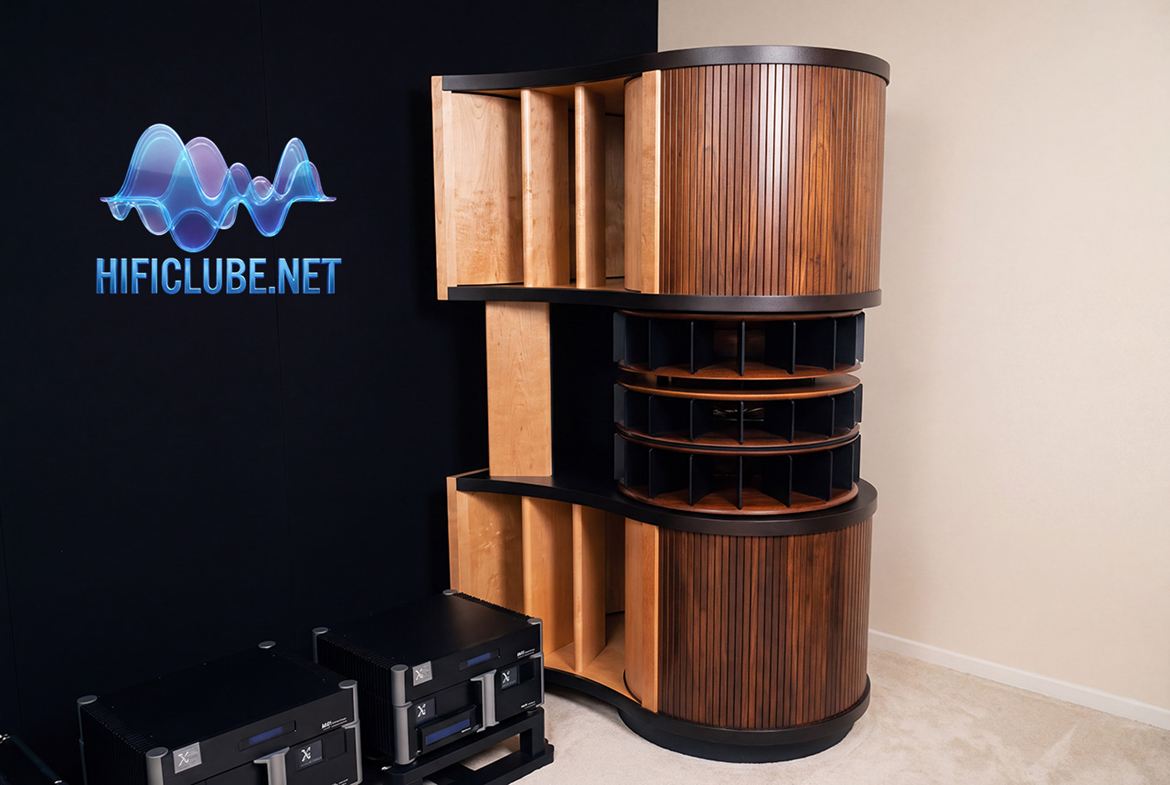
Platinum Audio Pulse 3.1
Affordable speakers
The pair sells for €1,699. A reasonable and affordable price for a very well-built mini monitor (the terminals could be of higher quality), compact, relatively easy to position thanks to the front reflex ports, capable of handling more ambitious amplification than the price suggests, and endowed with a rare combination of speed, dynamics, and musical enthusiasm.
Of course, Acoustic Energy sells 2- and 3-way floorstanding speakers for half the price. But this is what you pay for a legendary monitor. This is the AE1 Phil Jones would have built in 1987 if he’d had today’s technology.
After meeting him in Las Vegas in 1997, standing in front of those wild $100,000 Platinum Air Pulse 3.1 speakers, it’s funny to think that one of his best ideas can still fit under your arm.
At IMACUSTICA, Lisbon, you can listen to the full Acoustic energy range.