



It turns out that carbon can be eco-friendly after all. At a time when the world is striving for sustainability, HEDD is turning to carbon to reproduce music in an ecological way – that is, without distortion.
There are brands that don’t lose their personality, even when they switch transduction technology. HEDD made its name with the full-range AMT (Air Motion Transformer) driver. So, when the new D1 model arrived without AMT, I feared the worst: there goes the magic of HEDD. But look, not at all, or rather, listen…
The D1 remains an open-back, circumaural headphone with a TPCD (Thin-Ply Carbon Diaphragm). HEDD was the first to use a full-range AMT; now it is also the first to use an ultra-thin carbon membrane as a diaphragm, with the main objectives being to reduce mass, control resonance modes and avoid excessive damping.
A HEDD for the whole day
The D1 weighs just 350 grams (200 grams less than the TWO GT!), which, in itself, is a relief for ‘HEDDists’ accustomed to carrying a weight on their heads that prevented them from listening for long periods, not due to auditory fatigue, but due to neck strain.
The design is understated and functional, with that industrial minimalism that doesn’t just aim to seduce — above all, it aims to serve well. The ear pads are made of perforated velour, the headband is comfortable, and the whole unit feels robust. The cable is detachable, with a fabric sleeve, and the connection is made via two 3.5 mm jacks (one on each earpiece) and a 6.35 mm plug (included).
According to HEDD, all parts are easily replaceable should repairs be needed. But don’t worry, as the warranty, upon registration, is comprehensive. In an industry where disposable products reign supreme, this is music to our ears – and not just in a metaphorical sense…
32 ohms impedance and 100 dB sensitivity
Unlike models with AMT, the D1 isn’t just lighter on the head; it’s also lighter on the amplifier — and on the wallet, as the price (€700) is a third of the HEDD Two GT, which I loved to listen to.
The D1 isn’t just lighter on the head; it’s also lighter on the amplifier — and on the wallet.
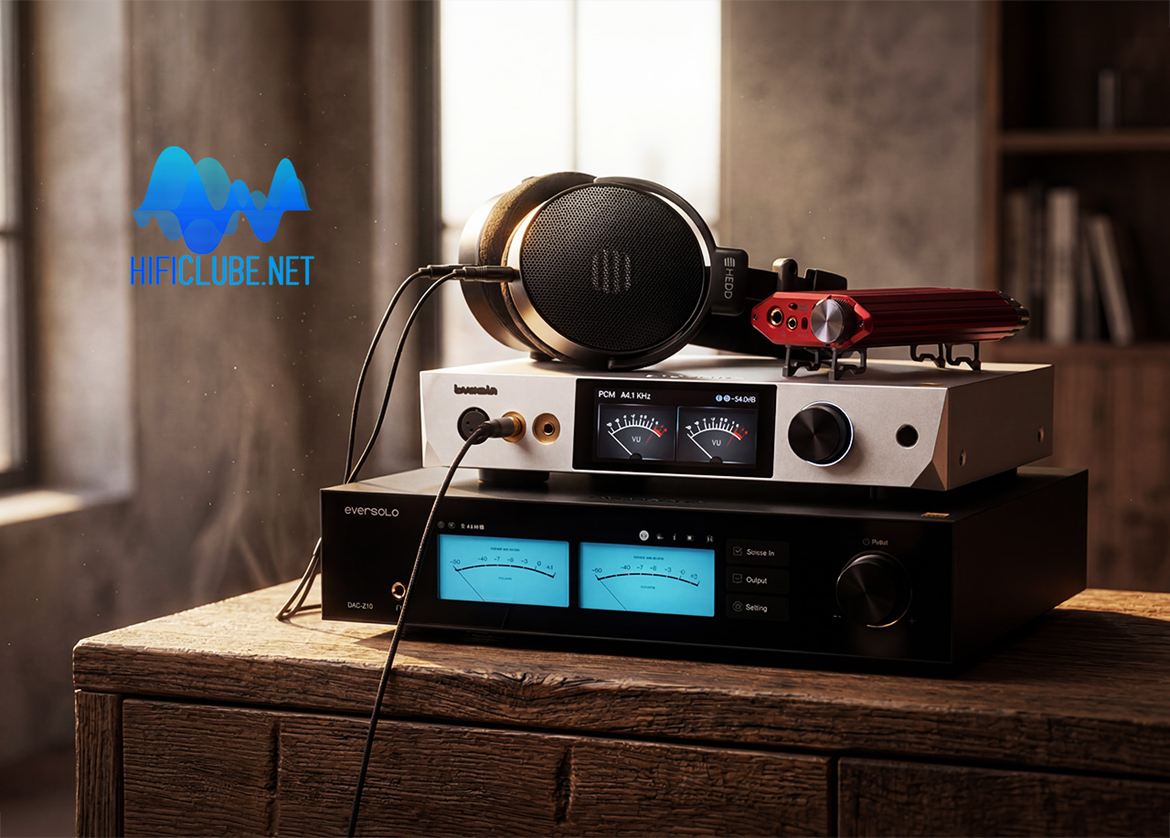
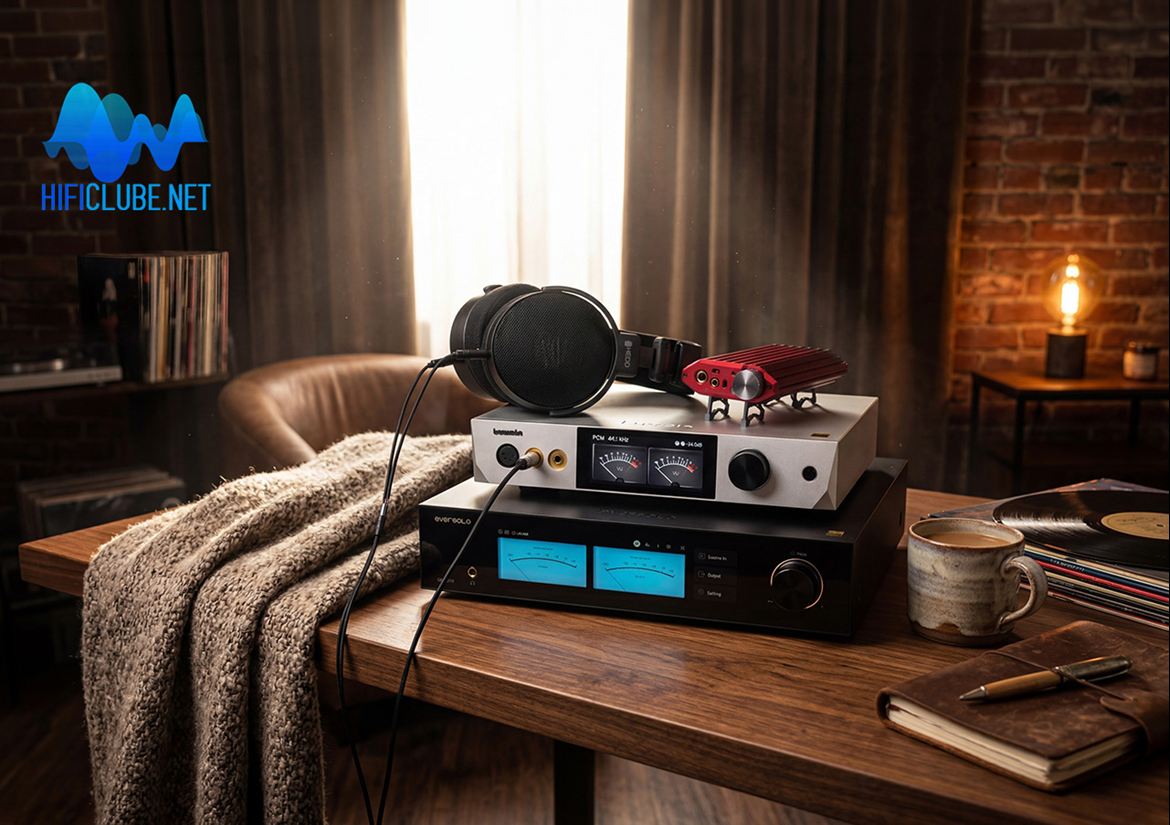
The D1 doesn’t need a high-end headphone amplifier and works flawlessly with any portable source, including a phone, with the right cable. But I always try to get the best out of every component. And so, I listened to them not with one, nor two, but with three different amplifiers: iFi Audio Diablo 2, Luxsin X9 and Eversolo DAC Z10. They all tasted different. They all sounded great.
With all of them, the D1 reproduced transients well, albeit without the ‘speed’ we’ve come to expect from AMT and maintained an organised soundstage even with complex material.
The D1 is, by nature, a neutral-sounding headphone — but not of that ‘anorexic’ neutrality that sometimes confuses honesty with thinness. The D1 has sufficient body but doesn’t turn bass notes into bloated bass lines, and it maintains a credible timbre with the piano, vocals, and strings.
Read everything I’ve written about its older siblings: Heddphone One, Two and Two GT, to realise that, more than any other audio component, listening through headphones depends heavily on the correct positioning of the earpieces and the shape of your ears, almost as much as on your hearing ability.
Above all, bass reproduction depends on the seal between the ear pads and your head. To such an extent that even perforated velour ear pads, as is the case with the D1, and leather ones make a difference.
For example, if you wear glasses, this affects the seal, and some of the bass is lost. In audiophile parlance, this is known as ‘the clamp/fit impact’. In other words, the ear pads’ pressure on your head makes such a difference that you only need to press the headphones with your fingers to push them closer to your head while listening to music to notice it immediately. Hence, with headphones, every head is its own judge—literally.
Under ideal conditions, the bass is fast, with a remarkable ‘stop-start’ response, but it doesn’t extend much below 45 Hz, which is great for mixing work, as it doesn’t obscure the definition with artificial sub-bass that seems to have been added just to impress the listener.
The midrange is excellent: the carbon diaphragm sounds almost like a Mylar diaphragm. Vocals have good presence and intelligibility. It’s a midrange that blends ‘studio’ and ‘home’ characteristics without excessive projection: clarity without harshness.
The treble has controlled brightness without emphasising sibilants. There’s a slight high-frequency boost that doesn’t compromise tonal balance and enhances definition, airiness, and the richness of detail.
The HEDDphones D1 sound good as they are and do not need much tweaking.
I consider that the HEDDphones D1 sound good as they are and do not need much tweaking. But if you have access to a parametric EQ, such as Roon’s, you can opt for the available preset Oratory 1990 (Harman Curve) or try my suggested HEDD D1 approximation to the Harman curve:
- LSQ 80 Hz, +4.0 dB, Q 0.70
- PK 35 Hz, +2.0 dB, Q 1.00 (helps to roll off a little further)
- PK 200 Hz, -1.5 dB, Q 1.00
- PK 2.7 kHz, +2.0 dB, Q 1.20
- PK 5.5 kHz, -1.5 dB, Q 2.50 (if you’re sensitive to the brightness of cymbals, trumpets and sibilance)
- HSQ 10 kHz, -1.0 dB, Q 0.70 (optional — if you don’t need that much airiness)
Note: Start with these settings and then adjust them to your liking. In the end, you’ll most likely opt for a natural sound, just like me.
Conclusion:
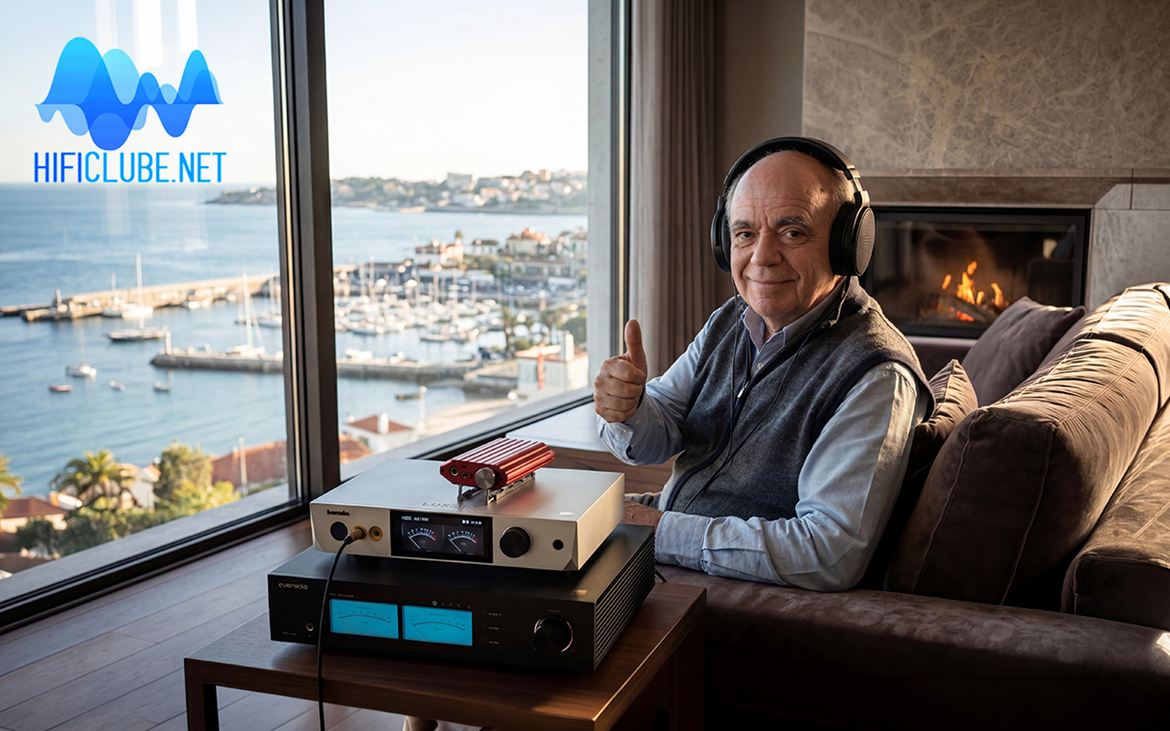
These aren’t headphones designed to impress in five minutes with inflated bass and artificial brightness. It is a headphone for listening — and, above all, for understanding: light, neutral and pleasant. And at a time when many products seem designed to please computers rather than humans, this is almost an act of resistance. All headphones that rival it cost at least twice as much.
For more information, please contact: EXAUDIO
HEDDphones D1 - An introduction in video by JVH